The Amazing Discovery: A Treasure Hidden for 4,500 Years!
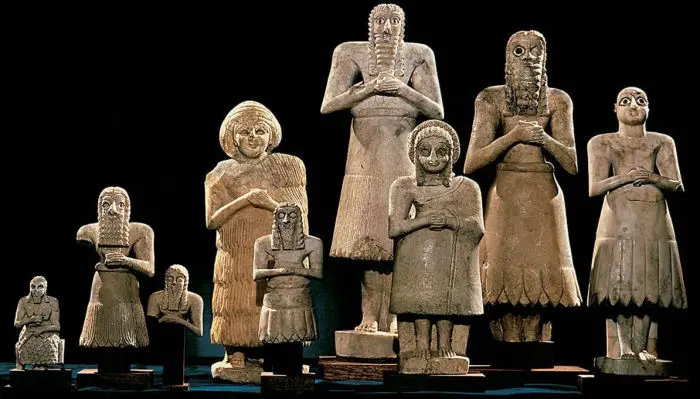
Imagine digging beneath an ancient temple floor and suddenly finding twelve mysterious statues staring back at you with enormous, wide eyes. That’s exactly what happened in 1933 when archaeologists were excavating at Tell Asmar, Iraq—an ancient city once known as Eshnunna.
These statues weren’t just ordinary art. They were buried together on purpose, like someone hiding their most precious treasures in a safe. And they had been waiting there, undisturbed, for roughly 4,500 years (between 2900–2550 BC)!
Why Do These Statues Have Such HUGE Eyes?
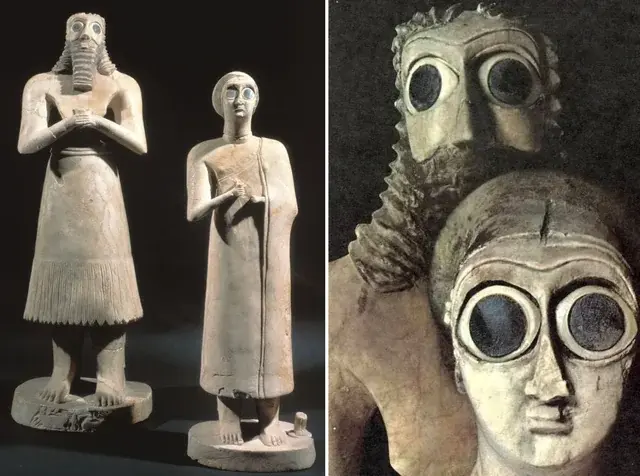
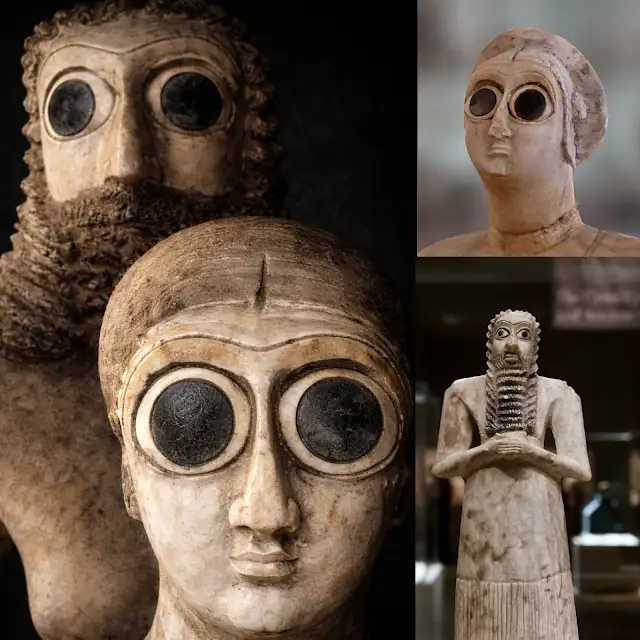
If you look at photos of the Tell Asmar statues, the first thing you’ll notice is their enormous, wide-open eyes. They look almost cartoonish or alien—but that was completely intentional!
Here’s the mind-blowing part: The artists didn’t want them to look realistic. Those giant eyes weren’t a mistake or bad art skills. They were a powerful symbol.
In ancient Sumerian belief, wide eyes represented eternal watchfulness. These statues were supposed to stand before the gods forever, always alert, always watching, always praying. Think of them as ancient security cameras—but instead of recording video, they were recording prayers!
The Ultimate Prayer Hack: Statues That Pray for You!
This is where it gets really cool. In ancient Sumer, people believed something we might find strange today:
These statues were stand-ins for real people.
Here’s how it worked:
- A wealthy Sumerian citizen (or even a king) would commission a statue of themselves
- The statue would be placed in the temple
- The statue would keep praying to the gods 24/7—even when the real person went home, ate dinner, or slept!
It was like having a prayer assistant that never gets tired, never sleeps, and never stops. The ancient Sumerians basically invented the idea of “set it and forget it”—but for religious devotion!
Who’s in the Hoard?
The collection includes 12 gypsum statues depicting:
- Men – probably wealthy donors or officials
- Women – likely wives or female devotees
- Deities – representations of gods and goddesses
The most famous piece is the “Standing Male Worshipper”—a figure with those signature huge eyes, clasped hands in prayer position, and an intense, eternal gaze directed toward the divine.
Where Are They Now?
Like many ancient treasures, the Tell Asmar Hoard was split up:
Bảng
| Location | What’s There |
|---|---|
| Iraq Museum, Baghdad | Part of the original collection |
| Oriental Institute Museum, University of Chicago | The other portion |
The University of Chicago team was actually involved in the original excavation, which is why they received some of the finds. Today, these statues are considered among the finest examples of Early Dynastic Sumerian sculpture ever discovered.
Why Should YOU Care?
These aren’t just old rocks. The Tell Asmar Hoard teaches us something fascinating about human nature:
- 4,500 years ago, people were already thinking about how to “outsource” their spiritual duties
- They believed art could have real power and function—not just decoration
- They understood the concept of perpetual presence before something greater than themselves
Next time you set a reminder on your phone or schedule an automatic payment, remember: the ancient Sumerians were doing something similar—just with stone statues and gods instead of apps and banks!
Quick Facts to Impress Your Friends
- Discovered: 1933
- Location: Tell Asmar, Iraq (ancient Eshnunna)
- Age: ~4,500 years old (2900–2550 BC)
- Material: Gypsum (a soft, carveable stone)
- Number of statues: 12
- Most striking feature: Enormous, symbolic eyes
- Purpose: Eternal prayer stand-ins for worshippers
- Current homes: Iraq Museum + Oriental Institute, Chicago
Want to See Them?
If you ever visit Chicago, stop by the Oriental Institute Museum at the University of Chicago. Standing before these ancient figures with their eternal, wide-eyed gaze is an experience you won’t forget. You’ll be looking at faces that were carved when the pyramids of Egypt were just being planned—faces that were meant to watch the gods forever.
And in a way, they still are.
Have you ever seen ancient statues with unusual features? What do you think about the idea of art having a “job” to do? Drop your thoughts in the comments! 👇
#AncientHistory #Archaeology #SumerianArt #TellAsmar #MysteryOfHistory #Iraq #AncientCivilizations #HistoryNerd