The Man Outlaws Feared — But History Almost Forgot
He was born enslaved.
He escaped into dangerous territory.
He became a federal lawman in one of the most violent regions of the American frontier.
And by the end of his career, Bass Reeves had arrested more than 3,000 fugitives.
Some say he was one of the greatest lawmen the Old West ever produced. Others believe his life may have helped shape the legend of the Lone Ranger. Yet for generations, his name was left in the shadows while fictional cowboys became immortal.
This is the story of Bass Reeves — the real frontier marshal whose life sounds almost too extraordinary to be true.
From Slavery to Survival
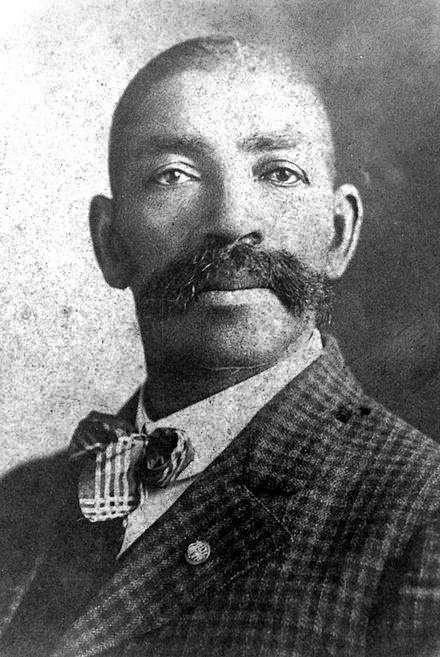
Bass Reeves was born in 1838 in Crawford County, Arkansas. Like many Black Americans of his time, he entered the world without freedom, living under the control of the Reeves family.
As a young man, he was taken to Texas. During the Civil War, the details of his life become partly unclear — and that uncertainty is part of what makes his story so powerful.
Some accounts say Reeves escaped after a conflict with his enslaver. Others place him near events connected to the war. What is widely accepted is that he eventually made his way into Indian Territory, a vast and dangerous region that included much of present-day Oklahoma.
There, Reeves learned the land.
He became familiar with the people, trails, rivers, hiding places, and dangers of the territory. These skills would later turn him into something outlaws feared most: a man who could find them almost anywhere.
The Frontier Was Not Like the Movies
The American West is often remembered through polished myths: white hats, black hats, dusty duels, and heroic sheriffs.
The real frontier was far more brutal.
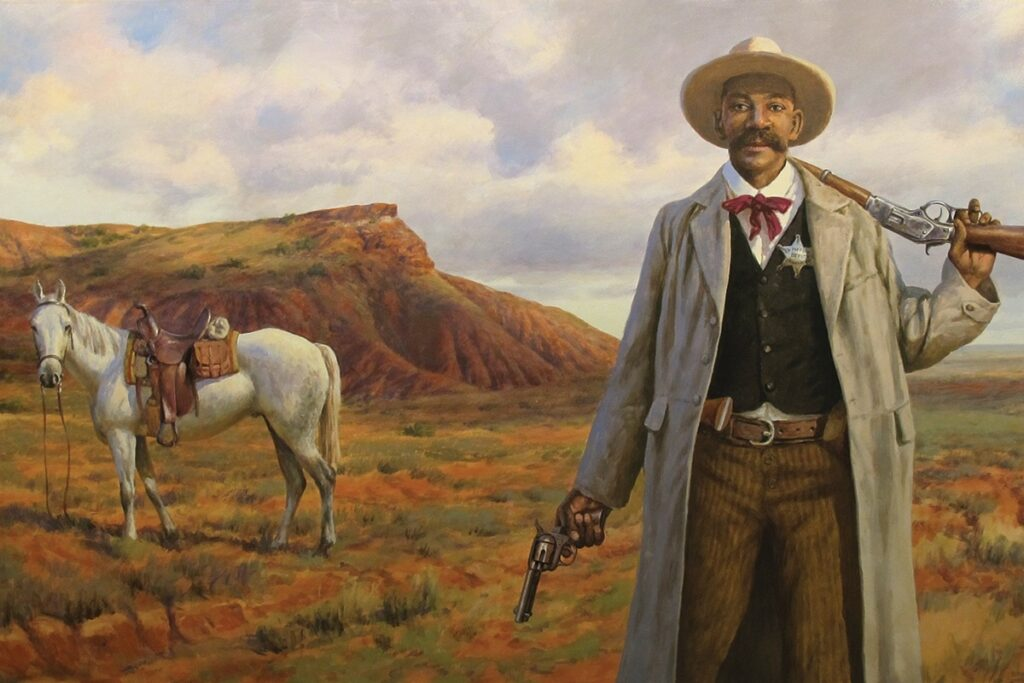
Indian Territory became a refuge for fugitives, thieves, murderers, bootleggers, and men trying to disappear beyond the reach of the law. For deputy marshals, entering that territory could be a death sentence.
There were no radios. No patrol cars. No backup arriving in minutes.
A deputy could ride for weeks across rough country, carrying warrants, tracking suspects, facing ambushes, and bringing prisoners back alive if possible.
This was the world Bass Reeves entered.
The Appointment That Changed Everything
In 1875, Federal Judge Isaac C. Parker took charge of the Western District of Arkansas. Parker’s court had jurisdiction over a massive and violent region, and he needed men who could survive it.
Bass Reeves was chosen as a Deputy U.S. Marshal.
That appointment made him one of the earliest Black deputy marshals west of the Mississippi River — a remarkable achievement in a country still scarred by slavery and racial violence.
But Reeves was not selected as a symbol.
He was selected because he knew the territory, understood people, could track fugitives, and had the nerve to ride into places other men feared.
The Marshal Who Always Got His Man
Bass Reeves became famous for his courage, discipline, and intelligence.
He was known as an expert marksman with both pistol and rifle. He could ride long distances, follow trails, study suspects, and use disguises to get close to dangerous criminals.
One of the most astonishing details of his career is that Reeves reportedly could not read or write. But that did not stop him. He memorized the warrants given to him, remembered the names and charges, and carried out his duty with precision.
For more than three decades, he worked across a territory of roughly 75,000 square miles.
By the time he retired from federal service, Reeves was credited with arresting more than 3,000 people.
That number alone should have made him one of the most famous lawmen in American history.
Instead, his story was nearly buried.
Justice Without Exceptions
One of the most powerful stories about Bass Reeves involves his own son.
When Reeves received a warrant for his son, who was accused of murder, he did not hide from the duty. According to historical accounts, Reeves carried out the arrest himself.
That moment reveals something central to his legend.
For Bass Reeves, the law was not just a weapon used against enemies. It was a code. It applied even when the cost was personal.
In a world full of corruption, violence, and racial injustice, Reeves built a reputation for something rare: relentless duty.
The Lone Ranger Mystery
Here is where the story enters the territory of legend.
Some have speculated that Bass Reeves helped inspire the fictional character known as the Lone Ranger. The similarities are tempting: a masked lawman, expert marksmanship, a powerful horse, dangerous missions, and a reputation for bringing criminals to justice.
But the connection is debated.
There is no definitive proof that the Lone Ranger was directly based on Bass Reeves. Still, the comparison survives because Reeves’ real life contains the kind of drama fiction usually invents.
He did not need Hollywood myth.
He was already the legend.
Why Bass Reeves Was Forgotten
Why did a man with more than 3,000 arrests disappear from popular memory?
Part of the answer lies in who got to write the mythology of the American West.
For decades, the image of the frontier hero was shaped by novels, films, television, and schoolbooks that often ignored Black cowboys, Native communities, Mexican vaqueros, and lawmen of color.
Bass Reeves did not fit the simplified version of the West that many people were taught.
So the legend faded.
But history has a way of resurfacing.
Today, Reeves is being rediscovered as one of the most extraordinary figures of the frontier era — not because he was fictional, but because he was real.
The Final Ride
Bass Reeves retired from federal service in 1907, around the time Oklahoma became a state. He later served as a police officer in Muskogee, Oklahoma.
He died in 1910.
By then, he had lived through slavery, civil war, emancipation, frontier violence, Reconstruction, and the transformation of Indian Territory into a modern state.
His life was not just a Western story.
It was an American epic.
The Hidden History of Bass Reeves
Bass Reeves was more than a marshal.
He was a survivor of slavery.
A tracker of fugitives.
A symbol of discipline.
A man who entered lawless territory and came back with prisoners.
A figure so extraordinary that later generations wondered if fictional heroes had been built from his shadow.
For Mysteries Beyond Earth, his story belongs in the world of hidden history — the kind of truth that feels almost mythical because it was buried for too long.
The mystery is not whether Bass Reeves was heroic.
The mystery is why so many people were never taught his name.
Because before the movies gave America masked riders and frontier legends, Bass Reeves had already lived a story bigger than fiction.