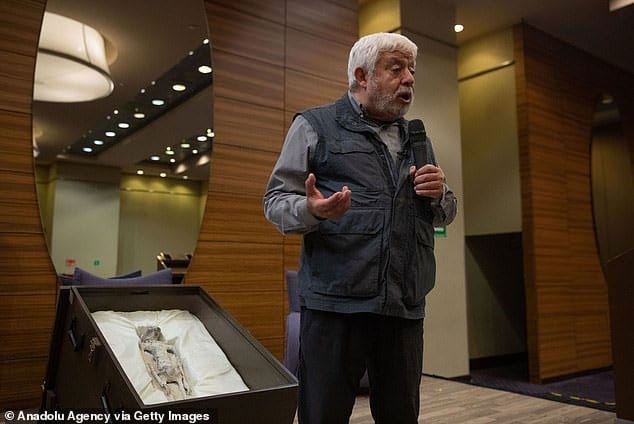
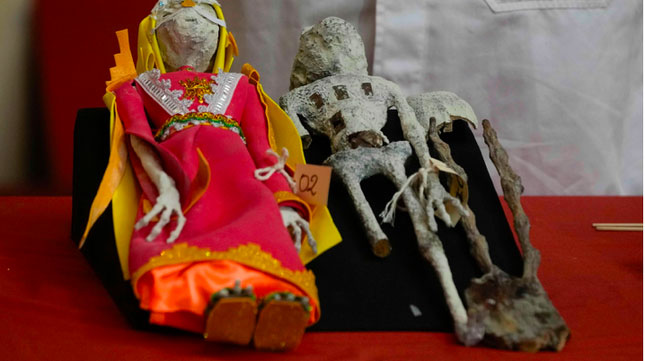
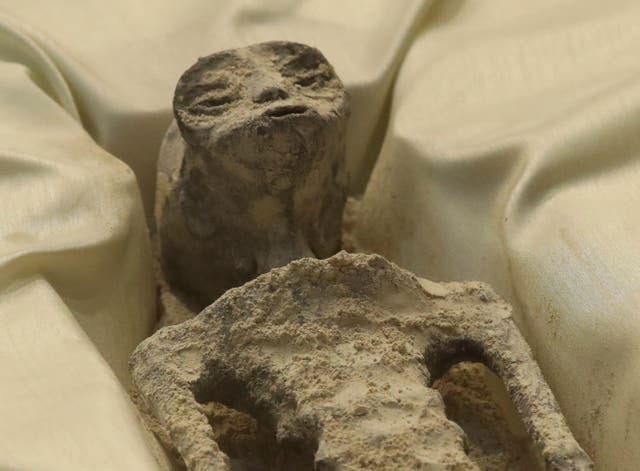
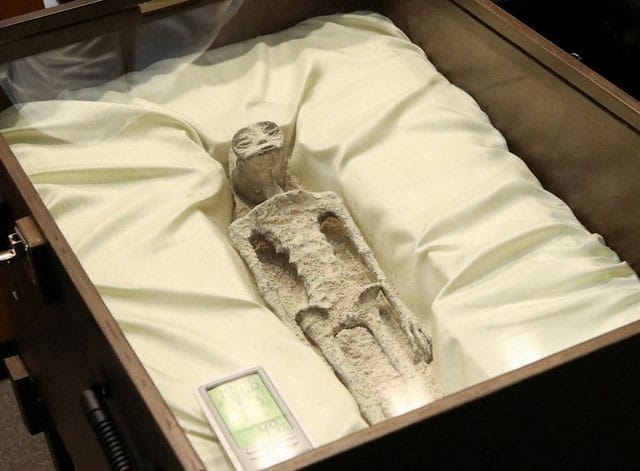
When two tiny, desiccated corpses were unsealed inside the halls of Mexico’s Congress, the global debate over extraterrestrial life shifted from internet forums directly into official government chambers. UFO researcher and journalist Jaime Maussan presented the 1,000-year-old specimens under oath, claiming they represent non-human entities that evolved independently of terrestrial life.
Discovered inside diatom algae mines in Cusco, Peru, the diminutive mummies bear little resemblance to human skeletons. According to Maussan, testing conducted at the National Autonomous University of Mexico (UNAM) utilized radiocarbon dating and DNA extraction to analyze the biological material. Radiographs of the specimens revealed surprising internal structures, including what appeared to be eggs inside one of the bodies.
The congressional hearing brought together notable figures from military and scientific circles to discuss Unidentified Anomalous Phenomena (UAP). Former U.S. Navy pilot Ryan Graves testified about frequent military encounters with airborne objects that defy conventional aerodynamics, while Harvard astrophysicist Avi Loeb discussed his research into potential interstellar technology.
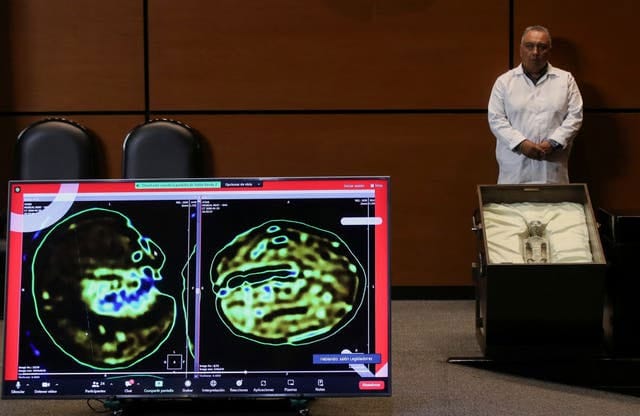
While mainstream scientists remain skeptical of the claims until independent peer reviews occur, the high-profile presentation highlights how disclosure efforts are accelerating globally. Public interest in unknown technology and non-human intelligence is no longer restricted to fringe circles, forcing governments to publicly address phenomena once swept under the rug.